- All
- Product Name
- Product Keyword
- Product Model
- Product Summary
- Product Description
- Multi Field Search

Views: 0 Author: Site Editor Publish Time: 2026-06-09 Origin: Site


Selecting the right hand tools at scale deeply impacts jobsite efficiency. It also dictates worker fatigue levels and overall material waste. You might assume any basic hammer performs equally well. However, specialized professional use requires exact specifications to maximize daily output. The core distinction always begins with the geometry of the claw. You must choose between two primary configurations: the curved claw and the rip claw. Professionals often refer to the rip claw as the straight claw. Making an incorrect choice often leads to unnecessary physical strain. It also increases the likelihood of damaging expensive base materials.
This article serves as a technical evaluation guide. We designed it to help buyers and tradespeople make highly informed decisions. You will learn how to match tool geometry directly to your operational demands. We will analyze structural mechanics, material durability, and critical ergonomic safety factors. Choosing correctly prevents costly rework down the line. Every swing matters on a demanding jobsite. By the end, you will know exactly which profile fits your crew.
Curved Claw Hammers provide maximum leverage for nail extraction with minimal surface damage, ideal for finish carpentry and general maintenance.
Rip Claw Hammers feature a straighter profile designed for prying, splitting, and light demolition, acting as a multi-tool for framers and remodelers.
Tool selection requires evaluating beyond just the claw: head weight (16oz–22oz+), handle material (wood, fiberglass, steel), and vibration dampening dictate long-term usability.
Selecting the wrong hammer geometry or weight leads to increased repetitive strain injuries (RSI) and decreased strike accuracy.
Understanding the fundamental geometry of your tool is critical. Manufacturers engineer each claw profile to solve distinct physical problems. You must align the tool design with your primary daily tasks.
The curved claw represents the traditional image of this tool. It features a deep, pronounced curve forming a hook shape. This specific geometry creates an immediate advantage for pulling fasteners.
Design Mechanics: The curved profile creates a natural, rounded fulcrum. It allows for a continuous rocking motion during extraction.
Primary Function: It excels at high-leverage nail pulling. The fulcrum rests directly against the wood. You require significantly less upper-body force to pull stubborn fasteners.
Best For: Professionals use it for precision work. It dominates finishing carpentry, cabinetry, and general household tasks. It protects the underlying wood surface from deep gouging.
Best Practice: Place a small piece of scrap wood beneath the hammer head. This protects delicate surfaces even further during extraction.
Common Mistake: Do not use a curved claw to pry apart heavily nailed lumber. The aggressive curve prevents deep penetration between boards. You risk snapping the claw tips.
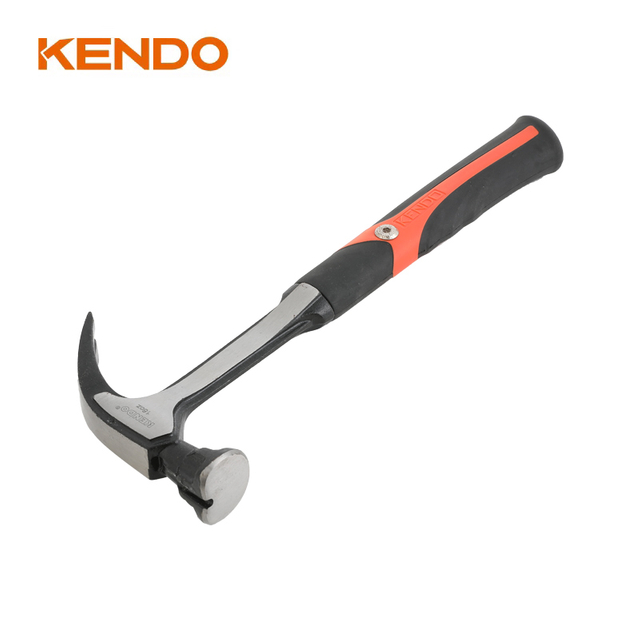
The rip claw features a much straighter, wedge-like profile. It looks aggressive and serves an entirely different primary purpose. Framers and demolition crews rely heavily on this design.
Design Mechanics: The straight orientation transforms the claw into a wedge. It aligns parallel to the handle axis.
Primary Function: It prioritizes penetration and separation. You drive the straight claw between joined materials. You then forcefully wedge them apart.
Best For: It tackles demolition, rough framing, and tearing up subflooring. It also works beautifully for splitting small lumber. It still pulls nails effectively. However, it provides much less natural leverage than its curved counterpart.
Best Practice: Drive the straight claw into the seam of two joined boards using deliberate strikes. Push sideways to split them apart quickly.
Common Mistake: Avoid using a straight claw for delicate trim removal. The sharp, wedge-like tips easily puncture thin materials and ruin expensive trim profiles.
Procuring a claw hammer requires analyzing your specific workflow. You cannot rely on a generic approach. Evaluating the working environment ensures better performance.
You must evaluate your primary daily workflow. Calculate the percentage of time spent on different tasks. If your job involves more than 30% tear-down operations, choose the rip claw. It offers a vastly better return on investment per swing. It acts as a pry bar, a wedge, and a striking tool simultaneously.
Conversely, consider a job focused primarily on installation and correction. Finish carpenters spend time adjusting trim or pulling misfired brad nails. The curved claw becomes essential here. It minimizes rework and protects the final product. It extracts fasteners cleanly without leaving massive dents.
Assess your typical working environment carefully. Different geometries require distinct spatial clearances.
Curved claws require a specific arc of space. You must rock the handle backward to pull a nail. If you work inside a tight cabinet, you might lack this necessary clearance. The handle hits the back wall before the nail releases.
Rip claws fit much better into tight corners. The straight profile slides into narrow gaps easily. However, pulling long nails in tight spaces presents a challenge. You often must insert a block of wood under the head. This block artificially creates the fulcrum you lose by skipping the curved design.
We must clarify a very common industry confusion. Almost all framing hammers use a rip claw. However, not all rip claws qualify as framing hammers.
A true framing hammer incorporates specific additional features. It typically utilizes a significantly longer handle to increase swing velocity. It carries a heavier head to drive massive nails. Finally, it usually features a milled or waffle face. This textured face grips the nail head aggressively. It prevents the hammer from glancing off during heavy strikes. A standard straight-claw model usually features a smooth face and a standard handle length.
The claw profile forms only half of the equation. You must evaluate the shaft material and head weight. These factors dictate long-term usability and physiological safety.
The handle material fundamentally changes how the tool absorbs shock. Industry standards emphasize the importance of vibration dampening for long-term health.
Handle Material | Vibration Dampening | Durability | Best Application Scenario |
|---|---|---|---|
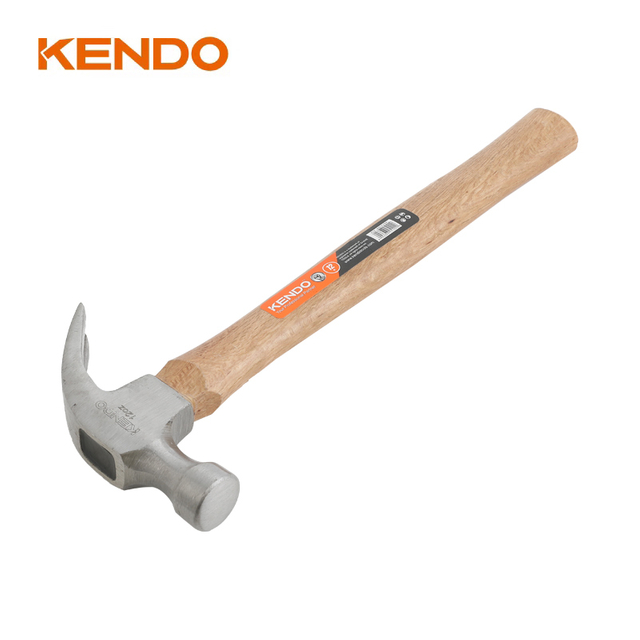
Wood (Hickory) | Excellent | Low/Moderate | Precision work; users who prefer natural balance and easily replaceable shafts. |
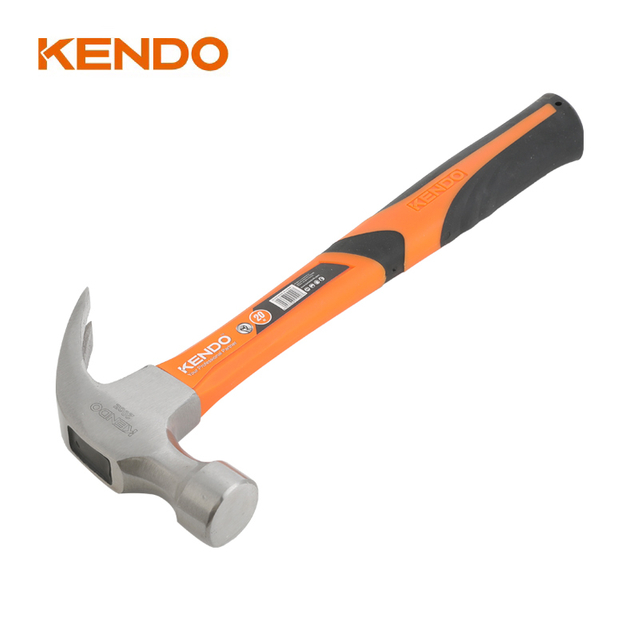
Fiberglass | Good | High | Fleet procurement; general maintenance crews facing varied, unpredictable tasks. |
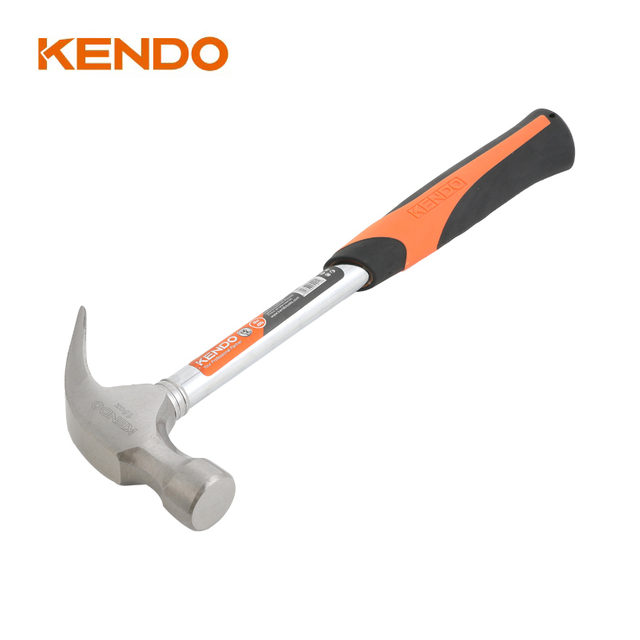
Solid Steel | Poor | Maximum | Heavy demolition; users requiring an indestructible tool (requires premium rubber grips). |
Wood, specifically American Hickory, offers the best natural vibration dampening. It feels balanced and organic. It breaks easily during overstrikes, but replacement is cheap. Fiberglass offers high durability and moderate vibration reduction. It represents a highly cost-effective choice for bulk fleet procurement. Solid steel provides maximum, unbreakable durability. However, it transmits the highest level of shock directly into your arm. You absolutely need high-quality ergonomic rubber grips to prevent joint damage.
Weight scaling determines your driving force and fatigue rate. Heavier is not always better. You must match the weight to the fastener size.
16 oz: This represents the baseline for standard curved claws. It perfectly balances swing speed and control. It suits interior tasks, trim work, and general DIY applications perfectly.
20–22+ oz: This serves as the baseline for rip and framing configurations. The added mass maximizes kinetic energy. It drives large framing fasteners efficiently. It also delivers the necessary brute force for demolition tasks.
Best Practice: Always test the balance of the hammer. Hold it near the base of the grip. The tool should feel slightly top-heavy but controllable.
Choosing the wrong tool introduces severe implementation risks. Ergonomics directly impacts productivity. Tool misuse destroys materials and inflates project budgets.
We must highlight the severe physiological cost of over-specifying your tools. Occupational Safety and Health Administration (OSHA) guidelines emphasize matching tool weight to the task. Giving finish carpenters 22-ounce solid-steel tools makes no sense. It increases daily fatigue dramatically.
Swinging excessive weight hundreds of times a day degrades joint health. It leads directly to repetitive strain injuries (RSI). Tendonitis and tennis elbow become common complaints. You lose workers to medical leave. Always issue the lightest tool capable of completing the task efficiently.
Using the wrong claw destroys your base materials. Imagine using a straight rip claw to forcefully pull long nails from finished oak trim. The straight tips dig deeply into the wood. As you pry backward, the sharp edges tear the grain apart.
This misuse results in deep, ugly gouges. You then face a frustrating choice. You must spend hours applying wood filler and sanding the surface. Alternatively, you must tear out the damaged piece and replace it entirely. Both options waste valuable time and money. A curved claw avoids this completely.
Many procurement managers make a critical error. They outfit a diverse crew using only one type of tool. They buy fifty identical straight-claw steel hammers. They distribute them to framers, drywallers, and finish carpenters alike.
This fallacy reduces overall team efficiency. The framers succeed, but the finish team struggles. Precision tasks take longer. Rework rates skyrocket. You must build a nuanced toolkit. Give specialized workers the specific profiles they need.
You now understand the mechanics, materials, and risks. You need a structured approach to make your final choice. Follow this logic to match the tool to the team.
For Precision & Finish Teams: Shortlist 16-ounce to 18-ounce curved claw models. Prioritize wood or high-grade composite handles. Ensure the hammer features a smooth face. This combination guarantees minimal surface damage and precise control.
For Rough Carpentry & Framing: Shortlist 20-ounce to 22-ounce rip claw configurations. Choose longer solid steel or ultra-durable fiberglass handles. Consider milled faces for extra grip on large nails. This setup maximizes kinetic transfer and endures heavy abuse.
For General Facility Maintenance: Shortlist a perfectly balanced 16-ounce to 20-ounce curved claw. Pair it with a fiberglass handle. Maintenance tasks remain highly unpredictable. This specific build offers maximum versatility. It handles light prying, standard driving, and survives occasional drops on concrete.
If your procurement team requires customized guidance on bulk tool selection, please feel free to contact us directly. We help optimize enterprise-level toolkits daily.
The debate between the curved claw and the rip claw misses the point. Neither configuration is objectively better than the other. The true goal requires functional alignment with your daily tasks. The curved profile offers unmatched leverage for safe nail extraction. The straight wedge excels at destructive prying and framing tasks.
We encourage buyers and professionals to audit their primary use cases carefully. Do not just look at the head. You must prioritize ergonomic safety alongside the claw profile. Evaluate the head weight and the handle material strictly. A well-chosen tool prevents repetitive strain injuries and boosts daily productivity. Take the time to match the exact specifications to your crew. It ensures a high-return investment for your entire operation.
A: Yes, it can pull nails. However, it requires significantly more manual exertion. The straight profile lacks a natural rocking curve. You often need to place a secondary fulcrum, like a scrap wood block, under the head to extract longer nails effectively compared to a curved claw.
A: Framing hammers generally feature a rip claw configuration. They utilize a heavier head, typically weighing 20 ounces or more. They also feature a longer handle for greater swing velocity and a textured milled face to prevent slipping on large nail heads during heavy strikes.
A: A weight range of 16 to 20 ounces represents the industry sweet spot. This weight offers enough kinetic driving force for standard nails. Simultaneously, it remains light enough to prevent excessive user fatigue and joint strain during prolonged daily use.
A: Milled or waffle faces grip the nail head aggressively upon impact. This texture reduces glancing blows when driving fasteners rapidly in rough framing. Professionals strictly avoid them in finish carpentry because the waffle pattern leaves deep, visible imprints on delicate wood surfaces.