- All
- Product Name
- Product Keyword
- Product Model
- Product Summary
- Product Description
- Multi Field Search

Views: 0 Author: Site Editor Publish Time: 2026-01-05 Origin: Site


Ever wondered why your measurements still come out wrong even with a measuring tool in hand? You're not alone. Whether you're in a machine shop, automotive workshop, or home garage, using the wrong tool for precision measurement can lead to expensive mistakes. This is especially true when it comes to choosing between calipers and micrometers.
The truth is, many professionals and DIYers confuse these two essential tools. They might look similar, but they serve different purposes — one is versatile, the other is extremely precise. Choosing the right one can make or break your project.
In this post, you'll learn the key differences between calipers and micrometers, including their accuracy, functionality, best use cases, and how to choose the right tool for your needs. We'll also compare some top-rated models from KENDO, a leading manufacturer of high-quality measuring tools. Expect detailed charts, specifications, and expert insights throughout the article.
Calipers are versatile measuring instruments used for measuring internal, external, depth, and step dimensions with moderate accuracy.
Micrometers are high-precision tools designed for a specific type of measurement (typically external) with extremely fine resolution.
Use calipers when you need flexibility and speed; choose micrometers when accuracy is the top priority.
A caliper is a multi-functional measuring tool designed to measure the distance between two opposite sides of an object. It is widely used in mechanical engineering, woodworking, metalworking, and even medical applications.
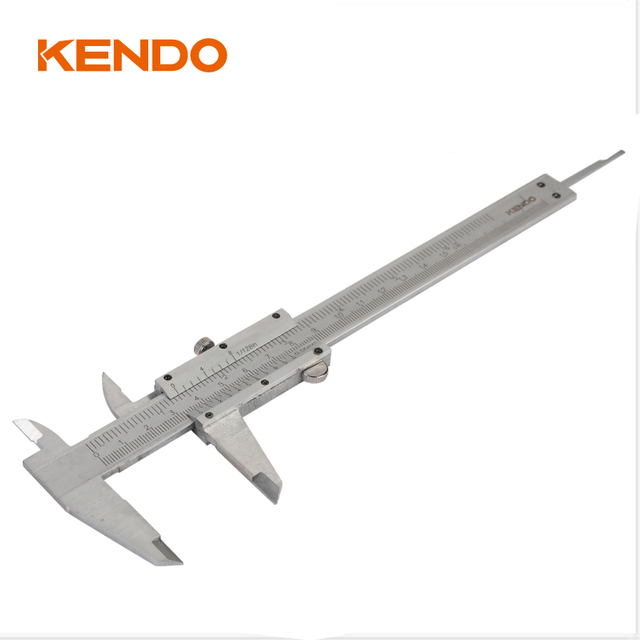
Vernier Caliper – Manual scale, no digital display.
Dial Caliper – Analog dial for easier reading.
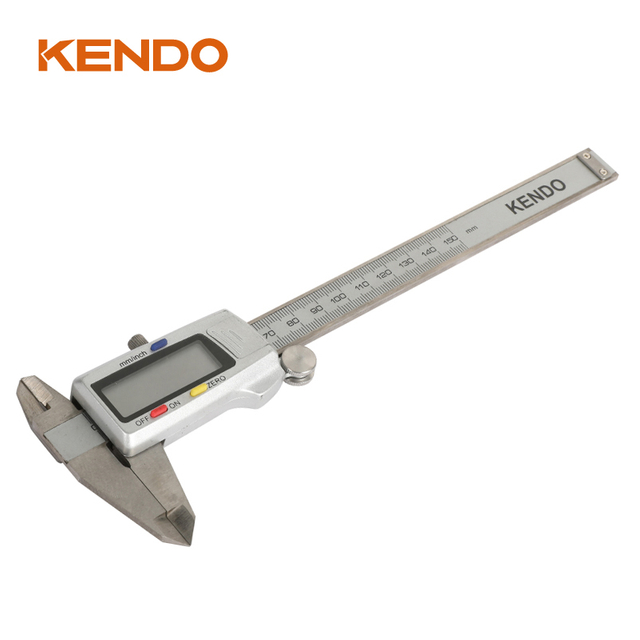
Digital Caliper – Electronic LCD display.
Material: Hardened stainless steel
Accuracy: ±0.02mm / ±0.001"
Resolution: 0.01mm / 0.0005"
Measuring Range: 0 - 150mm (6")
Display: Large LCD
Functions: Measures OD, ID, depth, and step
Auto shut-off: Saves battery
Packaging: Comes in a durable plastic box
Versatility: Can measure multiple types of dimensions.
Ease of Use: Especially digital models.
Cost-effective: One tool for many measurements.
Lower precision compared to micrometers.
Subject to parallax error in manual versions.
A micrometer is a high-precision measuring instrument used to measure small dimensions, typically in the range of 25mm or 1 inch segments. It's ideal for tasks that require extremely accurate measurements, such as in aerospace, automotive, and engineering applications.
Outside Micrometer – Measures the external dimensions.
Inside Micrometer – Measures internal dimensions.
Depth Micrometer – Measures depths of holes or slots.
Measurement Range: Usually 0–25mm (1") per tool.
Accuracy: Up to ±0.001mm.
Resolution: As fine as 0.001mm (0.00005").
Superior accuracy and repeatability.
Ideal for quality control.
Specialized designs for specific use cases.
Limited measurement range.
More expensive.
Less versatile.
| Feature | Caliper | Micrometer |
|---|---|---|
| Measurement Range | 0–150mm (can go up to 300mm) | 0–25mm per unit |
| Accuracy | ±0.02mm (Digital), ±0.05mm (Vernier) | ±0.001mm |
| Resolution | 0.01mm | 0.001mm or better |
| Versatility | High – OD, ID, depth, step | Low – usually for one type of measurement |
| Ease of Use | Beginner-friendly | Requires some experience |
| Cost | Lower | Higher |
| Best for | General-purpose measuring | High-precision measurement |
| Examples | Digital Caliper, Vernier Caliper | Outside Micrometer, Depth Micrometer |
You need to measure multiple types of dimensions.
You're working on DIY or general engineering tasks.
You prefer a more budget-friendly tool.
You need quick and approximate measurements.
You're working in precision environments, like aerospace or medical device manufacturing.
You need repeatable and extremely accurate measurements.
You're measuring small parts or tight tolerances.
Understand Your Tolerance Needs
If your project requires tolerances within ±0.01mm, a micrometer is the better choice. For general-purpose work, a caliper will suffice.
Choose Quality Brands
Tools from brands like KENDO offer industrial-grade materials, hardened stainless steel, and reliable accuracy.
Look for Dual-Mode Units
Devices that support both metric and inch readings add convenience, especially in international work.
Digital vs. Manual
If you're new to precision tools, start with a digital caliper. It's easier to read and usually includes auto-calibration features.
Invest in Both
Many professionals keep a caliper and a micrometer in their toolbox — one for flexibility, the other for precision.
While both calipers and micrometers are essential precision measuring tools, they cater to different needs. A caliper is the go-to instrument for flexibility and general measurements, while a micrometer is unmatched in accuracy. Understanding their differences enables professionals and hobbyists to make informed decisions, avoid costly errors, and improve the quality of their work.
If you're looking for a reliable, durable, and accurate measuring tool, KENDO's digital and vernier calipers offer excellent value for both industrial and home use.
You can, but the accuracy won't be the same. Use calipers for approximate measurements and micrometers when precision is critical.
Most digital calipers, like KENDO's model, offer ±0.02mm accuracy.
Yes. Although digital calipers are more common, vernier calipers are reliable, battery-free, and still widely used in many industries.
Hardened stainless steel is the industry standard for durability and accuracy.
Explore premium options at KENDO, a professional hand tool manufacturer with global distribution.