- All
- Product Name
- Product Keyword
- Product Model
- Product Summary
- Product Description
- Multi Field Search

Views: 0 Author: Site Editor Publish Time: 2026-01-19 Origin: Site


How has a simple measuring tool evolved to become a vital component in precision engineering, manufacturing, and even DIY home projects? The answer lies in the story of the digital caliper, a tool that's transformed how we measure with accuracy, speed, and reliability.
For centuries, humans have relied on mechanical tools to measure length, depth, and diameter. From ancient calipers carved from wood to sleek stainless steel digital instruments, the journey reveals not just innovation, but the growing demand for precision measurement.
In this post, you'll learn about the fascinating history of digital calipers, how they evolved through time, their technological milestones, and how they compare with analog alternatives. Whether you're a professional machinist, engineer, or hobbyist, this guide will give you a complete, detailed understanding of how digital calipers became what they are today.
Digital calipers offer superior accuracy, readability, and convenience over traditional calipers.
The evolution of calipers spans from ancient measuring tools to modern digital measuring instruments.
Today's digital calipers are essential in industries like manufacturing, aerospace, automotive, and DIY craftsmanship.
Technological trends point toward smart, connected, and IoT-enabled digital caliper devices.
Understanding the pros and cons of digital vs analog calipers helps you choose the right tool for your needs.
The earliest known calipers date back over 2,000 years. Artifacts discovered in Greek and Roman ruins reveal that early craftsmen used wooden and bronze calipers to measure the spacing between two sides of an object.
These ancient tools worked on a simple principle: manually adjusting the arms of the caliper and comparing the result to a ruler. While not as precise as modern instruments, they laid the foundation for dimensional measurement as we know it.
| Era | Tool Type | Material | Accuracy Level |
|---|---|---|---|
| 200 BC | Basic fixed-arm calipers | Bronze/Wood | Low |
| 1600s | Vernier calipers | Steel | Medium |
| 1950s | Dial calipers | Steel with dial | High |
| 1980s-Present | Digital calipers | Stainless steel, electronics | Very High |
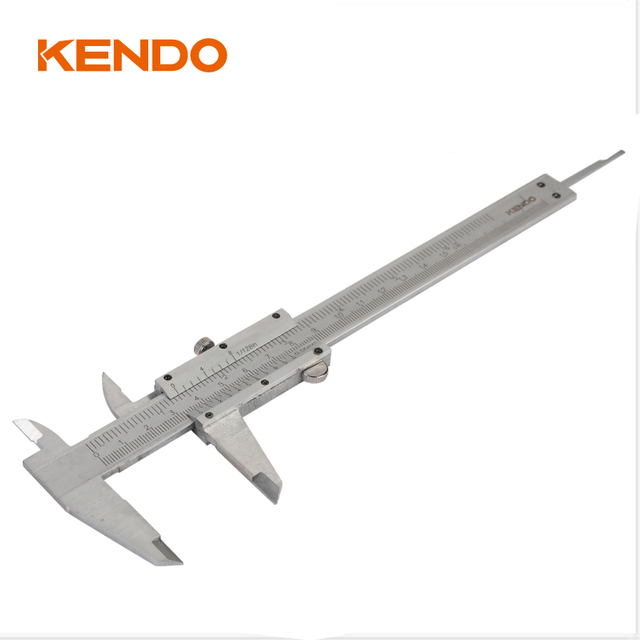
The Vernier caliper was invented by French mathematician Pierre Vernier in 1631. It introduced a secondary scale—the Vernier scale—which allowed users to measure with much greater precision, typically down to 0.02 mm.
The Vernier caliper became a staple in industries requiring measurable precision, from watchmaking to mechanical engineering. It was the first scientific leap toward precision instruments and laid the groundwork for what would become the digital caliper centuries later.
Key Features of Vernier Calipers:
Manual sliding scale
No electronics
Requires skill to read correctly
Durable and low-maintenance
In the mid-20th century, dial calipers became a more intuitive alternative to Vernier models. With a mechanical dial indicator, users could easily read measurements without interpreting a scale.
Advantages of Dial Calipers Over Vernier:
Easier to read
Faster measurement process
Better for users without technical training
However, they still had drawbacks:
Prone to mechanical wear
Susceptible to damage from dust and oil
Less accurate under intense use
The need for something even better—more precise, durable, and readable—paved the way for the digital caliper.
The first digital calipers emerged in the 1970s and 1980s, alongside the rise of microelectronics. These tools replaced analog scales and dials with digital LCD displays, dramatically improving usability and precision.
According to industry data, the adoption of digital calipers grew by over 300% between 1985 and 2000 in industrial settings.
Key Innovations Introduced:
Electronic sensors for accurate measurements
Dual unit support (metric and inch)
Zeroing function at any position
Battery-powered operation
Initially, they were expensive and reserved for high-end use. But as costs decreased and demand increased, digital calipers became the standard tool across numerous industries.
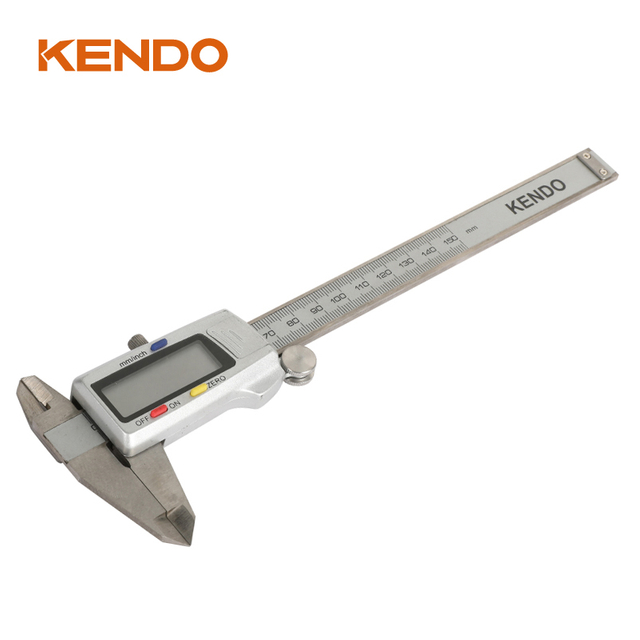
Today's digital calipers are more advanced than ever, combining precision engineering with modern technology. Take, for example, the Digital Caliper, Metric & Inch by KENDO, a globally recognized hand tool brand.
Hardened stainless steel body for durability
Accuracy: ±0.02 mm (<100 mm), ±0.03 mm (>100 mm)
Resolution: 0.01 mm / 0.0005"
Four measuring modes: OD, ID, depth, step
Large LCD screen for easy readings
Auto shutdown function to save battery
Ergonomic design for single-hand operation
Ideal for industrial, scientific, and DIY applications
Long-lasting and reliable in demanding environments
Supports both metric and inch units
Packaged in a protective plastic box
| Feature | KENDO Digital Caliper | Traditional Vernier Caliper |
|---|---|---|
| Accuracy | ±0.02 mm | ±0.05 mm |
| Display | Digital LCD | Manual scale |
| Units | Metric & Inch | Metric or Inch |
| Usability | One-hand operation | Two-hand operation |
| Power | Battery | None |
| Ideal Use | Industrial & Home | Industrial |
Choosing between analog and digital calipers depends on your use case. Here's a breakdown:
Highly accurate
Easy to read display
Metric/inch conversion
Zero-setting at any point
Data output for computer integration
Require batteries
Sensitive to water/dust without IP rating
Slightly more expensive
No battery required
Generally more rugged
Lower cost
Harder to read
Slower to use
Less precise in inexperienced hands
| Comparison | Digital Caliper | Vernier/Dial Caliper |
|---|---|---|
| Accuracy | High | Medium |
| Readability | Easy | Difficult |
| Speed | Fast | Slower |
| Maintenance | Medium | Low |
| Cost | Medium to High | Low to Medium |
The digital caliper is more than just a measuring tool. It's a product of centuries of innovation, driven by the human need for precision. From the days of bronze calipers to today's Bluetooth-enabled devices, the evolution reflects our progress in engineering, science, and craftsmanship.
For professionals in manufacturing, automotive, aerospace, or construction, having a reliable digital caliper is indispensable. Brands like KENDO continue to push the boundaries with high-performance and user-friendly tools that serve both industrial and personal users.
Whether you're upgrading from a dial caliper or buying your first one, now is the time to embrace the digital measuring revolution.
A digital caliper is used for precisely measuring the internal and external dimensions, depth, and step of an object.
Most digital calipers, like the KENDO Digital Caliper, offer accuracy up to ±0.02 mm.
Yes, they provide faster readings, better accuracy, and are easier to use, especially for beginners.
Absolutely. Digital calipers are perfect for DIY, woodworking, 3D printing, and model making.