- All
- Product Name
- Product Keyword
- Product Model
- Product Summary
- Product Description
- Multi Field Search

Views: 0 Author: Site Editor Publish Time: 2026-03-27 Origin: Site


Tooth count is one of the most important factors in TCT saw blade selection because it directly affects cutting speed, finish quality, chip removal, and blade behavior in different materials. A blade with fewer teeth usually cuts faster and more aggressively, while a blade with more teeth usually produces a smoother and cleaner edge.
Tooth count should never be considered alone. The best choice also depends on material type, cut direction, machine power, blade diameter, tooth geometry, and the required surface finish. A 24T blade may work well for fast framing cuts in softwood, but it may leave rough edges on plywood or MDF. A 60T blade may deliver a cleaner finish on sheet materials, but it may cut more slowly and generate more heat in rough-cut applications.
This guide explains how TCT saw blade tooth count affects performance, how to match tooth count to different materials and cutting tasks, and what common mistakes to avoid during blade selection.
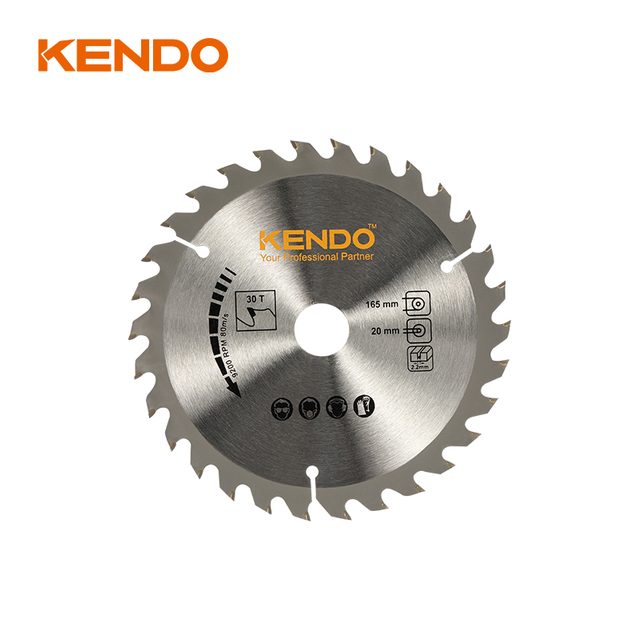
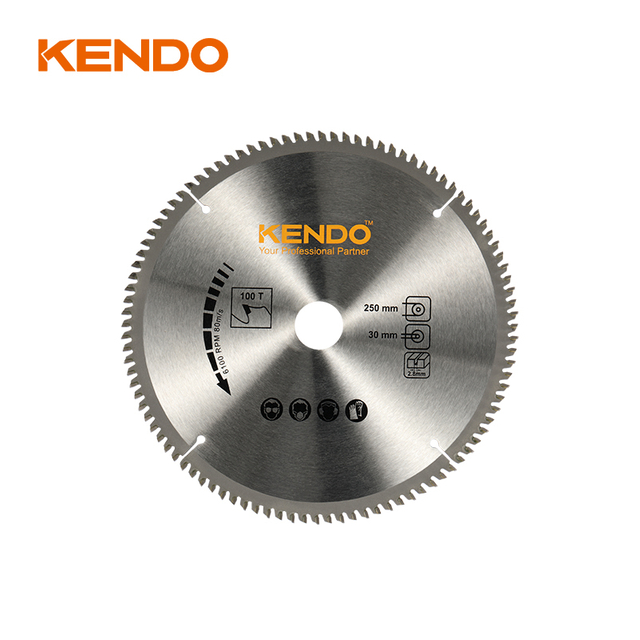
Lower tooth counts usually support faster cuts and rougher finishes.
Higher tooth counts usually support cleaner cuts and smoother finishes.
Tooth count should always be matched to the material and the type of cut.
Rip cuts and rough cutting often need fewer teeth.
Crosscuts, plywood, MDF, and laminates often need more teeth.
A general-purpose blade can handle many routine jobs, but a dedicated blade usually delivers better results in finish-sensitive work.
Tooth count matters, but tooth geometry, kerf, blade quality, and machine compatibility also affect the final result.
Every tooth on a saw blade removes a small amount of material during rotation. The number of teeth changes how the blade engages with the workpiece.
Fewer teeth remove more material per tooth
More teeth remove less material per tooth
This changes several aspects of cutting performance:
A lower tooth count usually allows faster feed speed because each tooth has a larger gullet and can remove chips more aggressively.
A higher tooth count usually creates a smoother edge because more teeth contact the material during the cut.
Fewer teeth usually mean larger gullets, which improve chip clearance in fast cuts and thick materials.
If tooth count is too high for the job, chip space may be reduced and heat can build up more quickly, especially in fast or heavy cutting.
A blade with the wrong tooth count may require more feed pressure, cut less efficiently, or produce more tear-out.
The easiest starting point is to think of tooth count as a balance between speed and finish.
| Tooth Count Direction | Main Result | Typical Use |
|---|---|---|
| Lower tooth count | Faster cutting | Rough cuts, rip cuts, framing |
| Medium tooth count | Balanced speed and finish | General-purpose cutting |
| Higher tooth count | Cleaner finish | Plywood, MDF, trim work, laminates |
Fewer teeth = faster cut, rougher finish
More teeth = slower cut, cleaner finish
This rule is useful, but it is still only a starting point. Material type, blade geometry, and machine setup also matter.
Different cutting tasks require different blade behavior. Tooth count should be selected according to what the blade needs to do.
| Cutting Task | Recommended Tooth Count | Expected Result |
|---|---|---|
| Fast rough wood cutting | 18T–24T | Fast feed, rougher finish |
| General-purpose wood cutting | 30T–40T | Balanced speed and finish |
| Crosscutting solid wood | 40T–60T | Cleaner end grain |
| Plywood cutting | 40T–60T | Reduced splintering |
| MDF and particle board | 48T–60T | Smoother edges |
| Fine trim and finish work | 60T+ | Clean, refined finish |
| Aluminum and non-ferrous cutting | High tooth count | Fine cut with dedicated blade design |
Material type is one of the most important selection factors because each material reacts differently during cutting.
Softwood is usually easier to cut and often does not require a high tooth count for standard work.
24T–40T
framing
rough construction cuts
general softwood cutting
24T is often preferred for speed
30T–40T provides a better balance between speed and edge quality
Hardwood is denser and usually benefits from a more controlled cutting action.
30T–50T
general hardwood cutting
cabinet parts
crosscutting hardwood boards
lower counts work for faster cuts
medium counts often improve control and edge quality
Plywood can splinter easily, especially on the face veneer, so it often benefits from a higher tooth count.
40T–60T
cabinet panels
furniture components
clean sheet cutting
smoother edges
less tear-out
better face quality
MDF and particle board usually require a smoother cutting action to reduce edge chipping and roughness.
48T–60T
shelving
furniture panels
interior joinery parts
improved finish quality
cleaner edge profile
Laminates can chip easily on the surface layer, so a higher tooth count is usually preferred.
60T or application-specific blade design
better surface finish
reduced visible chipping
Material-specific blade design becomes especially important in laminated materials. If application range matters as much as tooth count, that topic is covered in Best Applications for TCT Saw Blades.
Aluminum cutting requires more than just a higher tooth count. It also requires the correct blade design, tooth geometry, and machine suitability.
Higher tooth count with dedicated non-ferrous blade design
finer cutting action
improved control
reduced burr formation
A standard wood-cutting blade should not be treated as automatically suitable for aluminum.
Tooth count should also be matched to the direction of the cut.
Rip cuts follow the grain in solid wood. These cuts generate longer chips and usually need better chip removal.
24T–30T
larger gullets
faster material removal
lower cutting resistance in long-grain cuts
Crosscuts go across the grain and usually require a cleaner shearing action.
40T–60T
more cutting points
smoother edge
reduced splintering at the cut line
| Cut Type | Typical Tooth Count | Main Priority |
|---|---|---|
| Rip cut | 24T–30T | Fast chip removal |
| Crosscut | 40T–60T | Cleaner finish |
| General-purpose | 30T–40T | Balanced performance |
Not every job requires a highly specialized blade. In many workshops and jobsite settings, a general-purpose blade is used for routine cutting.
30T–40T
This range often works well for:
common solid wood cutting
mixed cutting tasks
everyday shop use
general site work
when finish quality is important but not highly critical
when one blade is needed for several routine tasks
when cutting speed and cut quality both matter
fine plywood cutting
MDF and laminated panels
trim work
non-ferrous metals
finish-sensitive applications
A broader comparison of blade design, use cases, and performance can be found in The Complete Guide to TCT Saw Blades.
Tooth count should not be viewed in isolation from blade diameter. A 24T blade on a smaller diameter blade behaves differently from a 24T blade on a larger one.
A larger blade has:
a longer cutting circumference
more distance between teeth at the same tooth count
different chip clearance behavior
A 40T blade on a 165 mm blade and a 40T blade on a 300 mm blade do not behave exactly the same way in use. Blade size, machine speed, and intended material all influence the result.
blade diameter
arbor size
maximum RPM
machine power
material type
cut depth requirement
Two blades with the same tooth count can perform very differently if the tooth geometry is different.
| Tooth Geometry | Typical Use |
|---|---|
| ATB (Alternate Top Bevel) | Crosscutting, general wood cutting |
| FTG (Flat Top Grind) | Fast ripping |
| TCG (Triple Chip Grind) | Laminates, plastics, non-ferrous metals |
A high tooth count alone does not guarantee a clean cut
A blade with the right tooth geometry often performs better than a blade chosen by tooth count alone
Material-specific geometry is especially important in laminates, composites, and aluminum
This often causes:
splintering
rough edges
more finishing work
This can lead to:
slower feed speed
more heat
reduced cutting efficiency
A blade chosen for crosscutting may not perform well in heavy ripping, even if the diameter is correct.
The wrong tooth shape can reduce cut quality even when tooth count looks appropriate.
A single blade can cover many routine jobs, but material-specific work usually benefits from a better-matched tooth count and tooth design.
A blade that is correct in theory may still perform poorly if the saw lacks the power or speed characteristics needed for the task.
| Material / Task | Recommended Tooth Count | Priority |
|---|---|---|
| Softwood rough cutting | 24T | Speed |
| Softwood general cutting | 30T–40T | Balance |
| Hardwood general cutting | 30T–50T | Control and finish |
| Rip cuts in solid wood | 24T–30T | Chip removal |
| Crosscuts in solid wood | 40T–60T | Cleaner edge |
| Plywood | 40T–60T | Reduced tear-out |
| MDF / particle board | 48T–60T | Smooth finish |
| Laminated board | 60T+ | Surface quality |
| Fine trim work | 60T+ | Finish |
| Aluminum | High tooth count | Dedicated blade design |
When selecting tooth count, start with these four questions:
Solid wood, plywood, MDF, laminate, and aluminum do not require the same tooth count.
Fast framing cuts need a different blade from cabinet-grade panel cutting.
Rip cuts usually need fewer teeth. Crosscuts usually need more.
If one blade must handle several common tasks, a medium tooth count often provides the most practical balance.
choose 24T–30T for fast ripping and rough wood cutting
choose 30T–40T for general-purpose cutting
choose 40T–60T for cleaner crosscuts and plywood work
choose 48T–60T for MDF and smoother panel cutting
choose 60T+ for finish-sensitive work and laminates
choose a dedicated high-tooth-count non-ferrous blade for aluminum
The correct tooth count improves both performance and control, but safe operation still depends on the full blade and machine setup.
Always check:
blade condition
blade mounting
machine compatibility
RPM rating
material suitability
feed pressure
guard function
For installation, inspection, and safe cutting practice, see How to Use TCT Saw Blades Safely.
Choosing the right TCT saw blade tooth count is mainly about matching the blade to the material, the cut direction, and the finish requirement. Lower tooth counts usually support faster and more aggressive cutting, while higher tooth counts usually support smoother and cleaner results. General-purpose work often fits within the 30T to 40T range, while plywood, MDF, laminates, and finish-sensitive tasks usually benefit from higher tooth counts.
Tooth count should never be treated as the only selection factor. Tooth geometry, blade diameter, kerf, machine compatibility, and material type all influence the final result. A well-matched blade cuts more efficiently, produces a better edge, and performs more consistently over time.
No. More teeth usually improve finish quality, but they can also reduce feed speed and increase heat in rough cutting applications.
A 30T–40T blade is often a practical choice for general-purpose wood cutting because it balances speed and finish quality.
A 40T–60T blade is commonly used for plywood because it usually produces a cleaner edge and reduces splintering.
A 48T–60T blade is often preferred for MDF because it can improve edge smoothness and reduce roughness.
Rip cuts often work best with 24T–30T because fewer teeth and larger gullets improve chip removal.
Crosscuts often work best with 40T–60T because more teeth create a cleaner shearing action across the grain.
A general-purpose blade can cover many routine jobs, but a dedicated blade usually performs better in finish-sensitive or material-specific applications.
Yes. The same tooth count behaves differently on different blade diameters, so tooth count should always be considered together with blade size and machine setup.
No. Tooth count is very important, but tooth geometry also has a major impact on cut quality, material suitability, and blade behavior.
Not by itself. Aluminum cutting usually requires a dedicated non-ferrous blade design in addition to a suitable tooth count.