- All
- Product Name
- Product Keyword
- Product Model
- Product Summary
- Product Description
- Multi Field Search

Views: 354 Author: Site Editor Publish Time: 2026-03-12 Origin: Site


Metalworking often requires a permanent, vibration-resistant bond between two sheets of material. While welding is powerful, it isn't always practical for thin sheets or onsite repairs. This is where the Hand Riveter becomes your most valuable asset. It is a mechanical tool designed to install "blind rivets," creating a secure fastener even when you only have access to one side of the metal.
Learning how to use a Hand Riveter like a pro involves more than just squeezing a handle. It requires an understanding of material thickness, hole alignment, and selecting the right Professional tool for the job. In this guide, we will break down the pro-level techniques to ensure your joints are clean, tight, and structurally sound.
Before you pull the trigger, you must have the right tool. Not all riveters are created equal. A Professional metalworker selects a tool based on the rivet size and the space constraints of the project.
For frequent use, a Heavy duty model with a forged steel body is essential. These tools handle the high-tension snap of stainless steel rivets without warping the tool's frame. If you are working in tight engine bays or inside cabinets, a Compact design with a shorter handle might be necessary, though it requires more hand strength to operate.
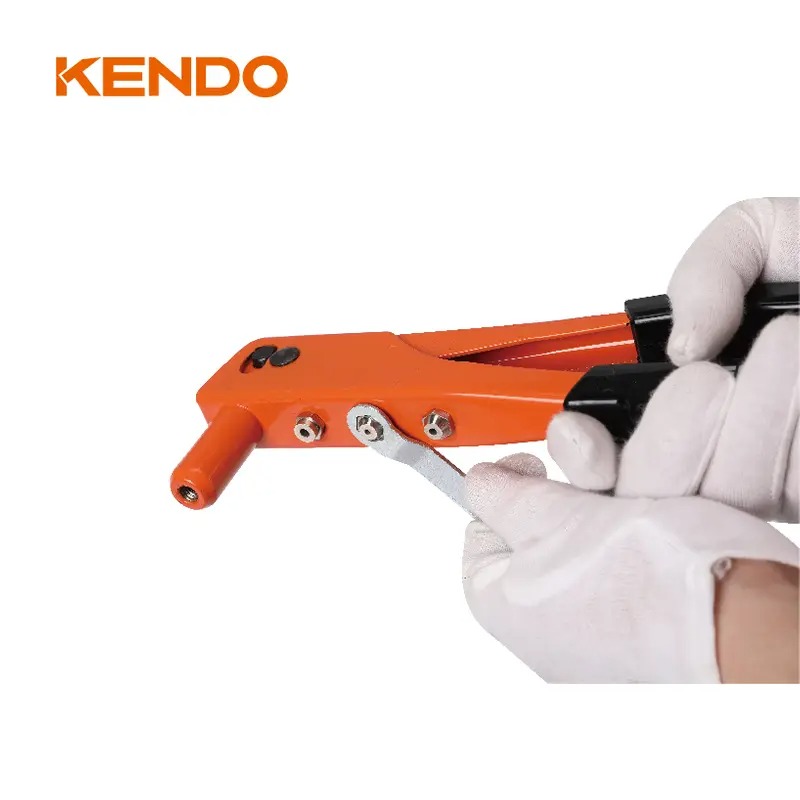
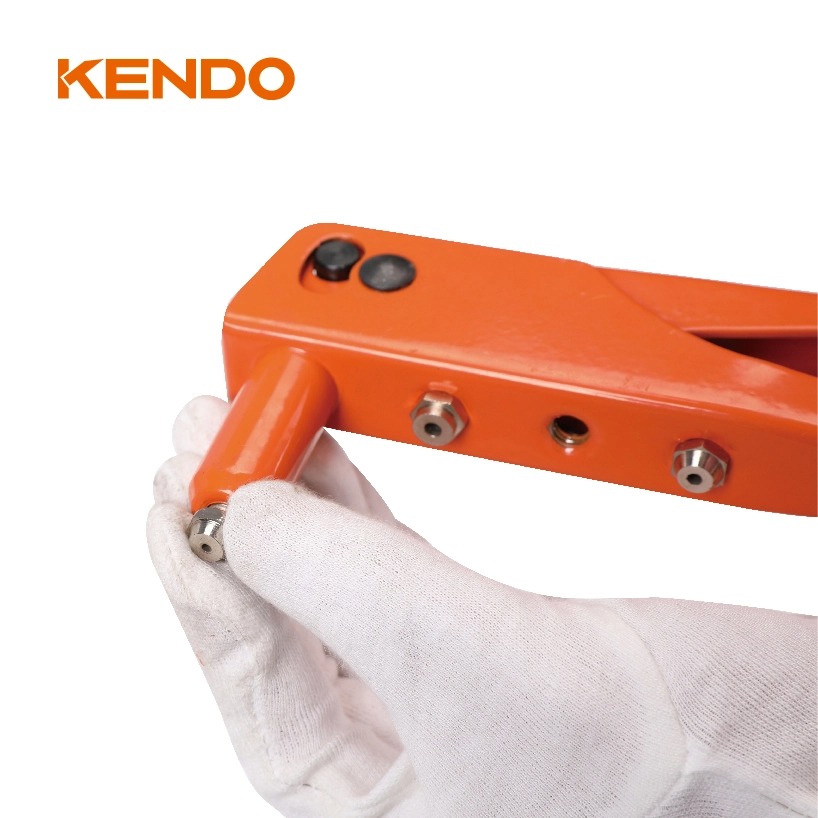
Most High-quality units come as a Multi nosepiece kit. This allows you to switch between different rivet diameters (typically 2.4mm, 3.2mm, 4.0mm, and 4.8mm) using a small wrench often stored in the handle. Ensuring your Hand Riveter has an Adjustable grip or interchangeable heads makes it a versatile partner for diverse metalworking projects.
Pros know that 90% of a good rivet joint happens before the tool even touches the metal. If your holes are misaligned or too large, the rivet will fail to "mushroom" correctly, leading to a loose joint.
Always use a drill bit that is exactly 0.1mm larger than the rivet diameter. For a 3.2mm rivet, use a 3.3mm bit. This "snug fit" is crucial. If the hole is too wide, the Hand Riveter will pull the rivet's mandrel through the sleeve without properly expanding it against the metal sheets.
After drilling, use a deburring tool to remove the sharp metal burrs between the sheets. If you don't, these tiny fragments of metal will create a gap that the rivet cannot close. Use C-clamps or locking pliers to hold the metal sheets perfectly flush. A Professional finish requires the sheets to be touching before the rivet is installed.
| Rivet Diameter | Recommended Drill Bit Size | Best Use Case |
| 2.4mm (3/32") | 2.5mm | Very thin sheet metal/Nameplates |
| 3.2mm (1/8") | 3.3mm | General DIY, automotive trim |
| 4.0mm (5/32") | 4.1mm | Guttering, HVAC ductwork |
| 4.8mm (3/16") | 4.9mm | Heavy duty structural joints |
Once the holes are ready, it is time to use the Hand Riveter. The process seems simple, but there is a specific rhythm to it that prevents tool jams and ensures a flat finish.
Insert the long "mandrel" (the thin tail) of the rivet into the Hand Riveter's nosepiece. Push the rivet head completely into the drilled hole. Ensure the tool is held at a 90-degree angle to the metal surface. If you tilt the tool, the rivet head will sit "canted," which looks amateur and weakens the bond.
Squeeze the handles together firmly. For larger rivets, it may take two or three pumps. On the final squeeze, the mandrel will snap off, leaving the rivet permanently deformed inside the hole. An Adjustable tool allows you to set the stroke length, making this process smoother.
Never leave the snapped mandrel inside the tool. Most Professional tools allow the mandrel to drop out of the back or front when the handles are opened. For high-volume work, look for a Hand Riveter with a "mandrel collector" bottle to keep your workspace safe from sharp metal waste.
Using a Heavy duty tool is only half the battle; you must also select the correct rivet material. If you use aluminum rivets on steel plates in a wet environment, you will face galvanic corrosion.
The "grip range" is the total thickness of the materials you are joining. If your rivet is too short, it won't have enough material to form a head on the back. If it is too long, the joint will be loose. A pro always checks the box for the grip range (e.g., 3mm–6mm) before starting.
Aluminum Rivets: Lightweight, easy to squeeze with a Compact tool, but low strength.
Steel Rivets: Stronger, requires a Heavy duty Hand Riveter.
Stainless Steel Rivets: Extremely strong and corrosion-resistant. They are very hard to pull, so you will need a Professional long-handle tool for extra leverage.
Even a Professional encounters issues. Knowing how to fix a jammed Hand Riveter is what separates an expert from a novice.
Sometimes, the snapped mandrel gets stuck inside the internal jaws. This usually happens because the jaws are dirty or the nosepiece is the wrong size. To fix this, open the handles fully and tap the nosepiece against a wooden block. If that fails, you may need to unscrew the nosepiece to release the tension on the internal springs.
If you squeeze the Hand Riveter and it feels like it is "slipping," your internal jaws are likely worn or coated in metal shavings. Most High-quality tools allow you to disassemble the head. Clean the jaws with a wire brush and apply a tiny drop of machine oil. Regular maintenance ensures your Hand Riveter remains Durable for years.
In metalworking, rivets serve two main purposes: holding things together (structural) and looking good (decorative).
In structural work, you might use a "backup washer" on the backside of the rivet. This is essential when riveting metal to a softer material like plastic or wood. The washer prevents the rivet from pulling through the softer material, creating a Heavy duty bond that won't fail under vibration.
For visible projects, like custom metal furniture, you want a "flush" finish. You can use countersunk rivets, which require you to "dimple" the hole before insertion. Using a Professional Hand Riveter with a clean nosepiece ensures you don't scratch the surrounding metal surface during the squeeze.
A Hand Riveter exerts hundreds of pounds of force. When the mandrel snaps, there is a sudden release of energy that can catch a beginner off guard.
Eye Protection: Always wear safety glasses. The mandrel snaps with significant force, and small metal shards can fly off.
Hand Placement: Avoid "pinching" your palm in the handles. Using a Professional tool with ergonomic rubber grips prevents blisters and injuries during long projects.
Stable Work Surface: Ensure your workpiece is clamped to a stable bench. If the metal slips while you are pulling the Hand Riveter, you could cause a jagged hole or injure yourself.
A High-quality Hand Riveter is an investment. To keep it working like a pro tool, you need a simple maintenance routine.
The internal jaws are the most stressed part of the tool. Every 500 rivets, you should unscrew the head and clean out the "dust" created by the mandrels snapping. This prevents the tool from slipping.
Apply a drop of light oil to the pivot pins and the internal springs. Avoid over-greasing, as this will attract metal dust and lead to a "gritty" feel. A well-maintained Professional tool should operate smoothly with minimal effort.
Mastering the Hand Riveter transforms your metalworking capabilities. By selecting a Heavy duty or Compact tool based on your needs, preparing your holes with precision, and choosing the right rivet material, you ensure every joint is a Professional one. It is a simple tool, but when used with these "Expert Insights," it provides one of the most reliable and aesthetically pleasing fasteners in the world of metalworking.
Q1: Can I use a Hand Riveter on stainless steel?
Yes, but you need a Heavy duty Hand Riveter with long handles for leverage. Stainless steel mandrels are much harder to snap than aluminum ones.
Q2: What happens if the rivet is too long for the hole?
If the rivet is too long, it will not pull tight against the metal sheets. This results in a "loose" joint where the sheets can vibrate or move. Always check the grip range.
Q3: How do I remove a rivet if I make a mistake?
The best way to remove a rivet is to use a drill bit the same size as the hole. Drill directly into the center of the rivet head until the head pops off, then tap the rest out with a punch.
At KENDO, we understand that a tool is an extension of the maker's hand. We operate a world-class manufacturing facility where we combine advanced metallurgy with ergonomic design to produce high-performance hand tools. Our strength lies in our rigorous quality control—every Hand Riveter we produce is tested for jaw durability and handle tension to ensure it meets Professional standards.
We take pride in our ability to provide B2B clients and serious hobbyists with Heavy duty tools that don't quit. From our Multi nosepiece kits to our Compact industrial designs, our factory utilizes the latest in automated production to maintain consistency across every batch. When you choose our tools, you are partnering with a factory that values precision and long-term reliability above all else. We are committed to empowering your next metalworking project with tools that are built to last.