- All
- Product Name
- Product Keyword
- Product Model
- Product Summary
- Product Description
- Multi Field Search

Views: 376 Author: Site Editor Publish Time: 2026-03-23 Origin: Site


Choosing the perfect Hand Riveter is a decision that impacts your productivity, physical fatigue, and the quality of your finish. Whether you are a DIY enthusiast or a Professional contractor, you likely face the dilemma of selecting between a single-handle and a double-handle design. Both tools serve the same purpose—joining two pieces of material with a permanent fastener—but they operate very differently in the field.
The "right" choice depends on the material thickness, the space you are working in, and how many rivets you need to set in a day. A Compact tool might save your back in tight corners, while a Heavy duty model might save your hands during high-volume assembly. This guide provides an expert breakdown of both designs to help you make an informed decision for your next project.
The single-handle Hand Riveter is the most common version of this tool. It is designed for one-handed operation, resembling a pair of pliers. Its primary appeal lies in its ergonomics for smaller tasks and its ability to fit into tool belts without adding excessive weight.
Because it relies on the grip strength of a single hand, this Hand Riveter is best suited for aluminum or small-diameter steel rivets. It uses a spring-loaded handle that resets after each pull. However, if you are working with stainless steel rivets, you might find the force required to be quite high. It is a Compact solution for light repair work, automotive trim, or HVAC ducting where agility matters more than raw power.
Most Professional single-handle models come with a Multi nosepiece set. These are different-sized nozzles stored directly on the tool body. They allow you to switch between 2.4mm, 3.2mm, 4.0mm, and 4.8mm rivets quickly. Having an Adjustable nosepiece system integrated into the handle ensures you never lose parts while moving around a job site.
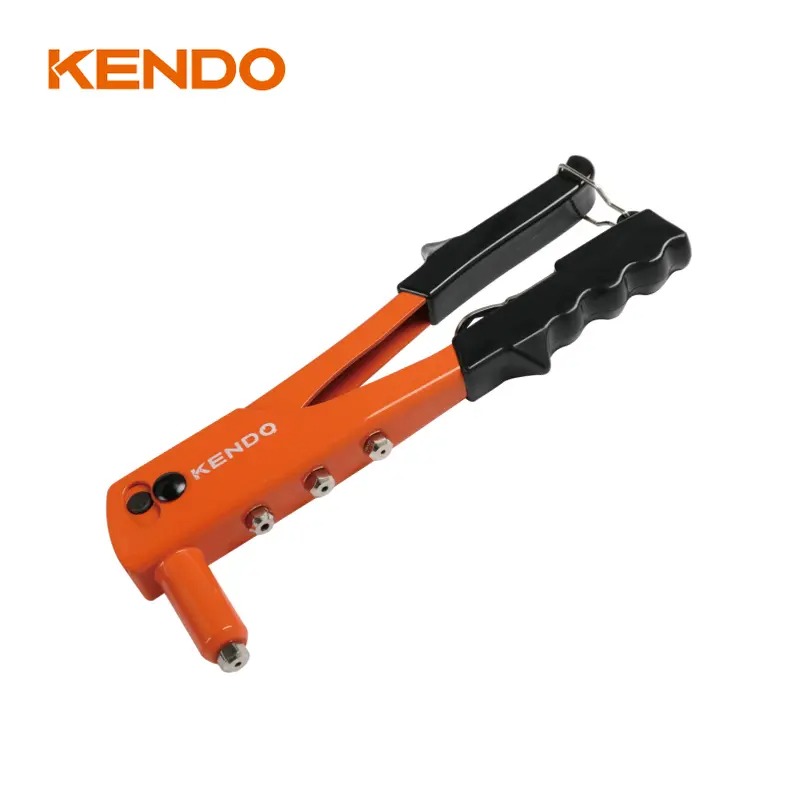
When the job gets bigger, the tools must follow suit. A double-handle Hand Riveter (often called a "lever riveter") requires both hands to operate. It looks similar to a pair of bolt cutters and uses long handles to create massive mechanical leverage.
The long arms of a double-handle Hand Riveter allow you to set large, Heavy duty rivets with minimal effort. While a single-handle tool might require 40kg of grip force, a lever-style tool reduces that significantly through its fulcrum design. This is the preferred choice for structural work, agricultural equipment repair, or any application involving thick steel plates.
These tools are built to last. They often feature high-strength alloy steel bodies and reinforced linkages. While they aren't as Compact as their single-handle counterparts, they offer a level of reliability that high-production environments demand. They are the definition of a Professional grade tool designed to handle the toughest stainless steel fasteners without failing.
User fatigue is a silent killer of project timelines. If your hand starts cramping after ten rivets, you won't finish the day strong. Understanding how each Hand Riveter design affects your body is crucial for long-term health and efficiency.
Single-handle tools often have a wide grip span when fully open. This can be difficult for people with smaller hands. A Professional tool will feature an Adjustable handle stroke to accommodate different hand sizes. Conversely, double-handle tools utilize your chest and arm muscles, which are much stronger and more resilient than the small muscles in your palm.
Single Handle: Faster for small rivets in easy-to-reach places. Great for "one-off" fixes.
Double Handle: Slower to set up but much faster for repetitive, Heavy duty tasks. It reduces the physical strain that causes breaks and downtime.
Sometimes, the choice isn't about power—it is about access. A tool is useless if it cannot reach the rivet hole. This is the primary battleground between the two designs.
A Compact single-handle Hand Riveter can reach deep into engine bays or inside cabinets. Because you only need one hand to operate it, your other hand is free to hold the workpiece or steady yourself on a ladder. It is the king of overhead work and awkward angles.
A double-handle Hand Riveter needs a wide "swing" area. You need room to spread the arms fully to engage the rivet mandrel. In a cramped hallway or under a car, you might find it impossible to open the handles wide enough to function. Before buying, visualize the narrowest part of your workspace. If you don't have 50cm of clearance, the Heavy duty lever tool might stay in the box.
Both types of Hand Riveter require maintenance to keep the internal jaws biting the rivet mandrels correctly. However, their internal complexities differ.
The "jaws" inside a Hand Riveter are the most critical components. Over time, metal shavings can clog the teeth. An Adjustable tensioning screw on the back of the tool allows you to maintain the proper "bite" as the tool wears. Professional models allow you to disassemble the head easily to clean or replace these jaws.
Double-handle designs have more moving parts and pivot points. We recommend applying a light machine oil to the joints every few weeks of use. This prevents the "gritty" feeling that can develop in Heavy duty tools. Keeping the tool clean ensures the Multi nosepiece threads don't seize up, allowing for smooth size transitions during a project.
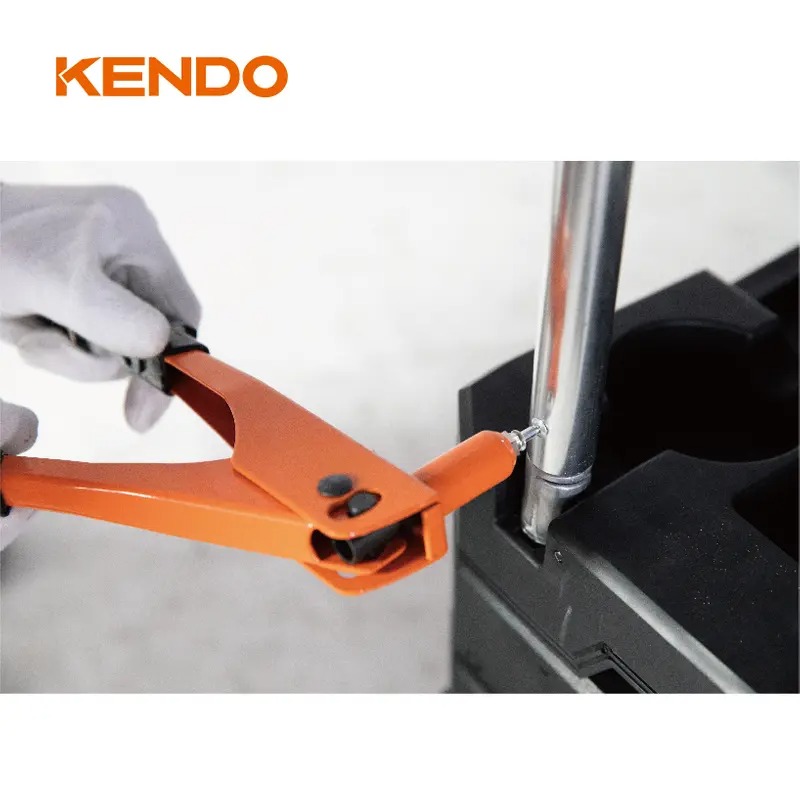
You cannot use a light-duty tool for a Heavy duty job. Doing so usually results in a jammed tool or a snapped mandrel that gets stuck in the nosepiece.
Aluminum rivets are soft. A Compact single-handle tool handles them perfectly. Stainless steel, however, is much harder. If you try to pull a 4.8mm stainless steel rivet with a single-handle tool, you risk bending the handle. For anything involving stainless steel or 6.4mm industrial rivets, a double-handle Hand Riveter is mandatory.
Gutter Installation: Use a single-handle tool for aluminum rivets.
Trailer Repair: Use a double-handle tool for steel structural rivets.
Appliance Repair: Use an Adjustable single-handle tool for varying material thicknesses.
Heavy Machinery: Exclusively use a Heavy duty lever riveter.
| Rivet Material | Recommended Tool Type | Effort Level |
| Aluminum | Single Handle | Low |
| Copper | Single Handle | Medium |
| Steel | Double Handle | Low (Leverage) |
| Stainless Steel | Double Handle | Medium (Leverage) |
Modern Hand Riveter designs now incorporate Adjustable features that blur the lines between hobbyist and Professional tools. These features allow the tool to adapt to the specific rivet length and material hardness.
An Adjustable nut on the handle controls how far the jaws pull the mandrel with each squeeze. This is vital for "blind" riveting where you cannot see the back of the material. It prevents you from over-pulling and breaking the rivet head off, which is a common mistake for beginners.
The Multi nosepiece design has evolved. Gone are the days of needing a separate wrench. Many high-end tools now feature "tool-less" nosepiece changes. You simply unscrew them by hand. This saves minutes every hour, which adds up significantly over a large project.
If you are still undecided, ask yourself these three questions to find your ideal Hand Riveter.
How much room do I have? If the answer is "not much," go for the Compact single-handle model.
What is the rivet material? If you are using steel or stainless steel, buy the Heavy duty double-handle version.
How many rivets am I pulling? For more than 50 rivets a day, the double-handle design will protect your joints and muscles from repetitive strain.
Most Professional workshops actually keep both in their kits. They use the single-handle for speed and the double-handle for strength.
The battle between single and double-handle Hand Riveter designs comes down to a balance of power and space. A Compact tool offers unmatched agility, while a Heavy duty lever tool offers the mechanical advantage needed for industrial fasteners. By understanding the Multi nosepiece options and Adjustable features available, you can choose a tool that not only completes the job but does so with Professional efficiency.
Q: Can a single-handle Hand Riveter pull stainless steel rivets?
A: It can, but only for very small diameters (under 3.2mm). Anything larger requires more force than most people can apply with one hand, and it may damage a non-Professional tool.
Q: Why does my rivet mandrel keep getting stuck in the nosepiece?
A: This usually happens if the Multi nosepiece is the wrong size for the mandrel. If the hole is too tight, the mandrel can't drop through. Ensure you match the nosepiece size to the rivet diameter exactly.
Q: How do I know if I need a Heavy duty riveter?
A: If you are working with material thicker than 3mm or using steel fasteners, a Heavy duty double-handle riveter is the safest and most efficient choice.
At our company, we operate a world-class manufacturing facility where we turn this belief into reality. We don't just produce tools; we engineer solutions that meet the highest Professional standards. Our factory is equipped with high-precision testing labs where we simulate thousands of cycles for every Hand Riveter design to ensure it stays Durable and reliable under real-world pressure.
Our strength lies in our attention to detail—from the ergonomics of a Compact handle to the material science behind our Heavy duty lever systems. We take pride in our B2B capabilities, providing global partners with a Multi nosepiece toolset that is both Adjustable and high-performing. When you choose our tools, you are choosing decades of manufacturing expertise and a commitment to quality that empowers you to build with confidence.